01
What we sense
Ambient ethylene, CO₂, oxygen-depletion volatiles, and microbial off-gases sampled across the room’s air mass at parts-per-billion.
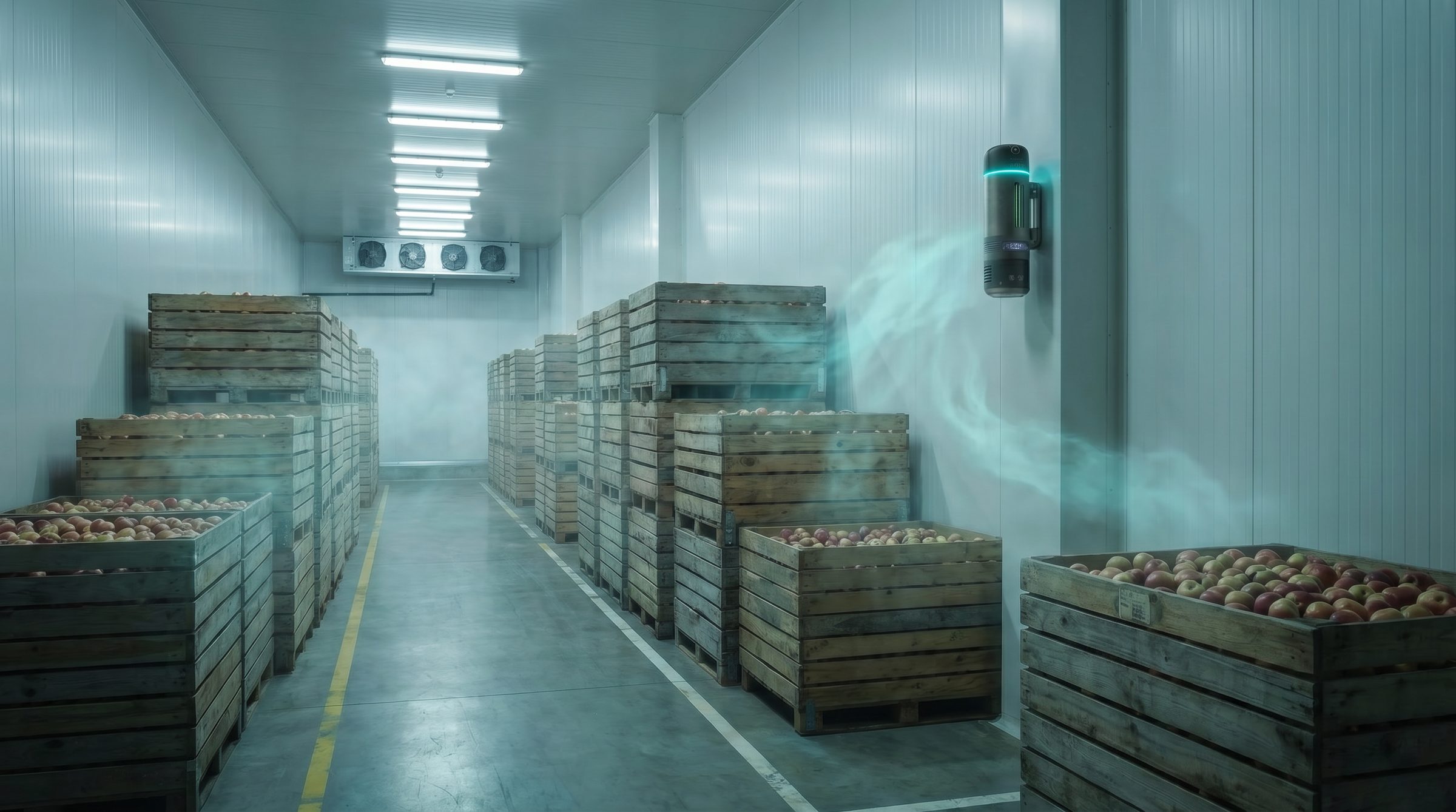
Packhouses and on-farm cool rooms hold fruit for weeks or months at a time. Ethylene accumulates slowly, then crosses a threshold that wakes the entire room into ripening. The E-Canister watches that threshold continuously, so you scrub or vent before the room turns.
Apples, pears, kiwifruit, stone fruit — long-term cool storage works because the ripening signal is suppressed by cold and CA. But ethylene leaks in: a stressed bin, a forklift exhaust event, an off-spec lot. Once the room’s ambient ethylene crosses ~50 ppb, every bin starts ripening at once.
Ambient ethylene, CO₂, oxygen-depletion volatiles, and microbial off-gases sampled across the room’s air mass at parts-per-billion.
Mains-powered units stream every 15 seconds via PoE or Wi-Fi to the Moseley cloud. Multi-canister deployments map ethylene gradients across the room.
Drive your scrubber on real ethylene, not a timer. Catch a single bad bin before it tips a 200-tonne room. Document storage conditions for buyers and auditors.

Pilot programs run 30–90 days with a single canister or a fleet. Talk to a scientist about the volatile signature in your environment.