01
What we sense
Ethylene, CO₂, ethanol and acetaldehyde at parts-per-billion across the container’s air column. The signature shifts long before any visible damage.
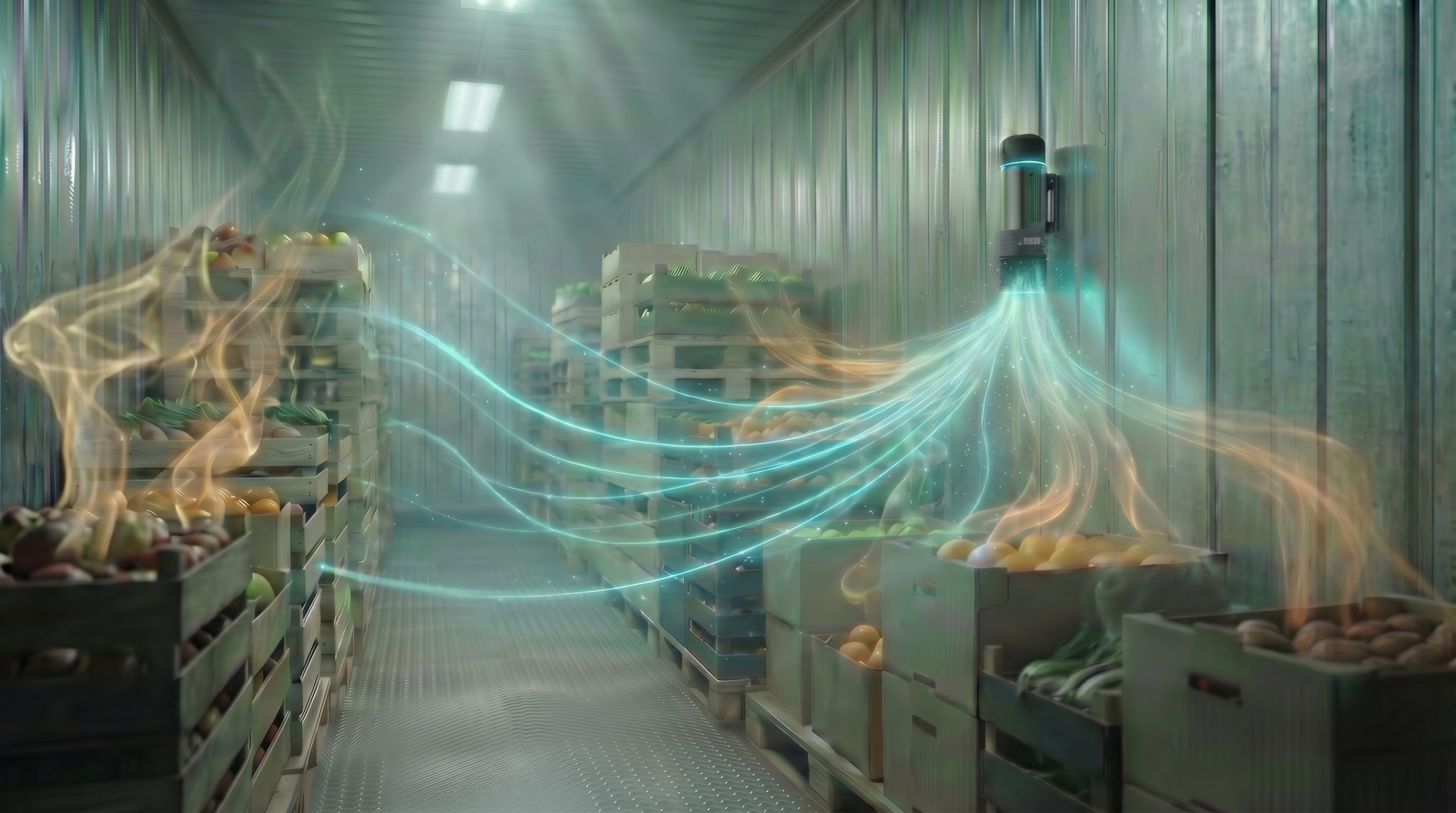
Reefer containers spend 20–40 days locked in steel between origin packhouse and destination port. Power swaps between ship, dock and rail. Comms drop in port. The E-Canister rides inside the container, samples volatiles continuously, and reconciles a complete voyage record the moment connectivity returns.
Once the doors close at origin, a reefer container is invisible. Power may transfer cleanly from genset to ship to dock to rail — or it may not. A single warm hour, a stuck door seal, or a slow ethylene build-up can tip the entire load. Temperature loggers tell you about heat. They say nothing about the volatile signature that warns of ripening, fermentation or microbial decay.
Ethylene, CO₂, ethanol and acetaldehyde at parts-per-billion across the container’s air column. The signature shifts long before any visible damage.
On-board logging at 60 s resolution with satellite uplink at sea and cellular sync at every port and rail yard. Full voyage reconciles into the Moseley cloud the moment the container lands.
Grade inbound on volatile signature at port-of-arrival. Reroute, pre-cool, or triage before the container clears customs. Hold carriers and packhouses to a defensible record of every voyage.

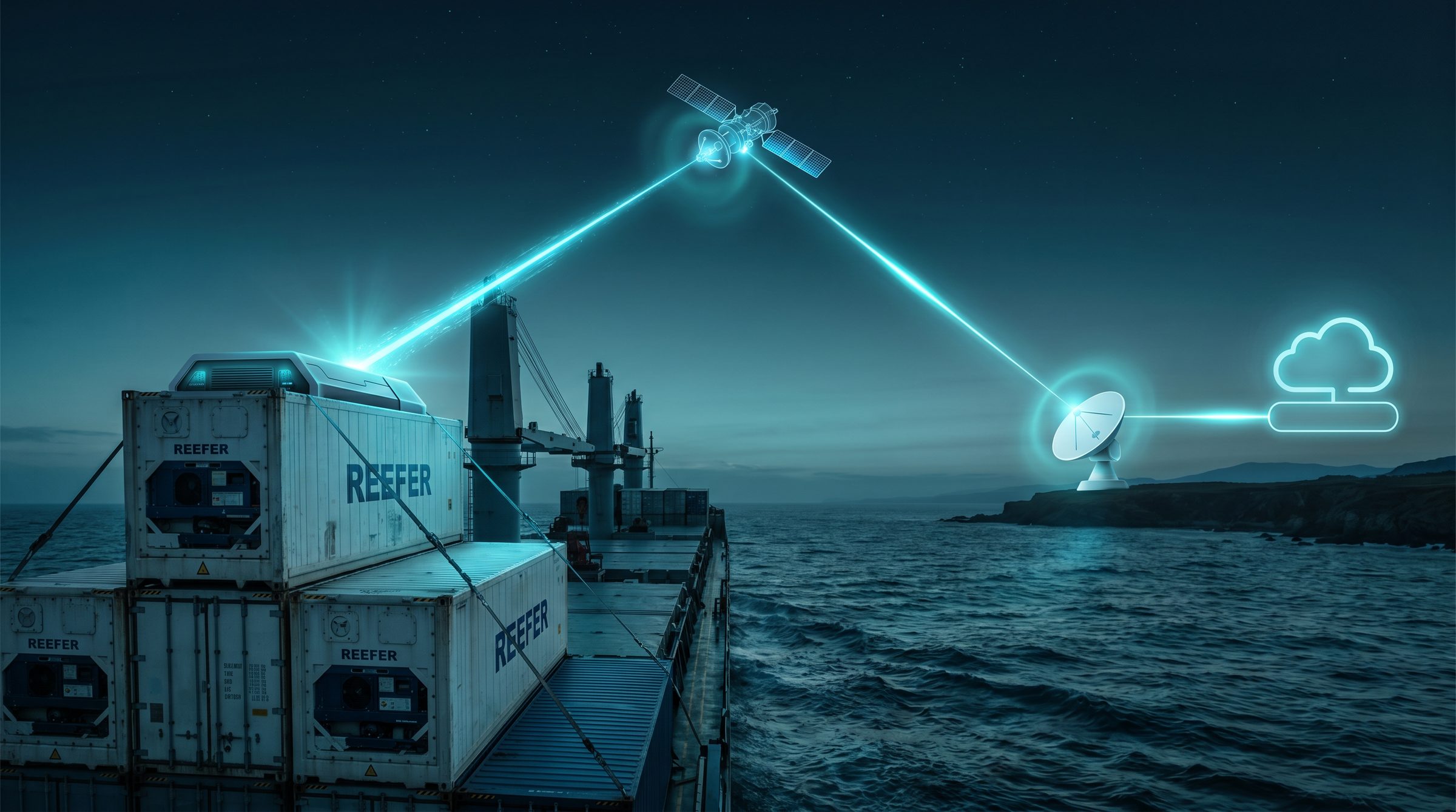
Cellular dies the moment the ship leaves the breakwater. The E-Canister doesn't. Every reading lifts off the container roof on a low-power satellite uplink, hops through low-earth orbit to a ground station, and lands in the Moseley cloud in near real time — so the people at the destination see what's happening inside the box while the box is still at sea.
Pilot programs run 30–90 days with a single canister or a fleet. Talk to a scientist about the volatile signature in your environment.