01
What we sense
Ethylene, CO₂, ethanol, acetaldehyde, and microbial off-gases at every monitored dock door, staging bay, and cool corridor.
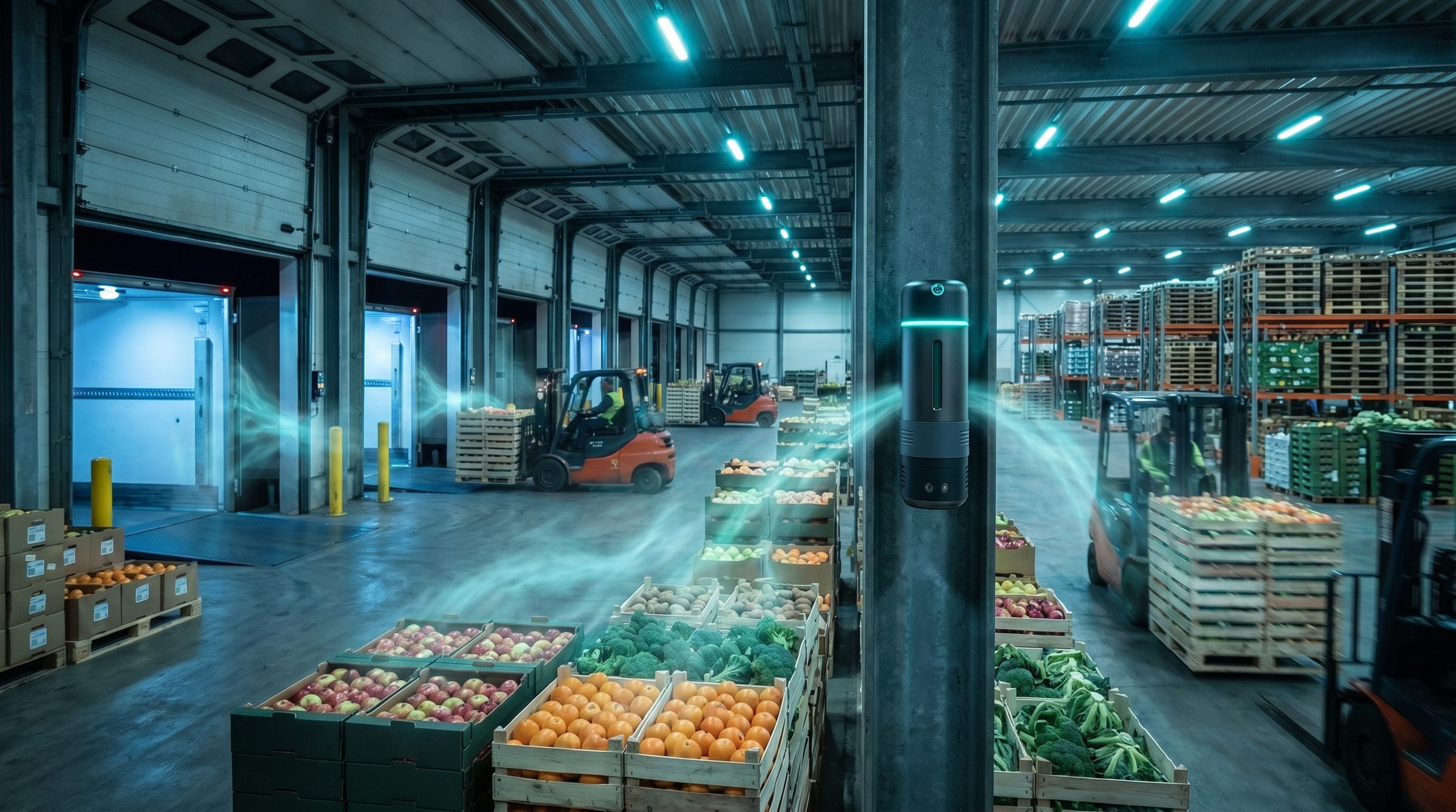
Distribution centres are where mistakes from upstream become your problem. Trailers arrive, doors swing open for ten minutes, pallets stage in a cool corridor, then move into picking. The E-Canister grid covers every step — dock door, staging bay, cool corridor — so you grade inbound on volatile signature, not just temperature.
By the time a pallet of stone fruit reaches your DC, it has spent 2–5 days in trailers and yards. A clean temperature log doesn’t mean clean produce — ethylene and fermentation gases accumulate during transit and tell you the load’s real state. Catch it at the dock and you can re-route, discount, or reject before it ever enters a pick path.
Ethylene, CO₂, ethanol, acetaldehyde, and microbial off-gases at every monitored dock door, staging bay, and cool corridor.
Every canister streams to the Moseley cloud. Aggregated views show inbound trailers ranked by volatile load, staging bays by gas drift, and corridors by ethylene background.
Reject or discount inbound on volatile signature. Pull-forward picks for at-risk pallets. Flag carriers with chronic in-transit issues. Feed the data straight into your WMS via API.

Pilot programs run 30–90 days with a single canister or a fleet. Talk to a scientist about the volatile signature in your environment.